

ጫጩቶች በባንድ ተይዘዋል
5/22 ፣ 3:45 PM ፡ ዛሬ በሪችመንድ ውስጥ ደመናማ የአየር ሁኔታ ቢኖርም፣ በሪቨርፍሮንት ፕላዛ ዌስት ታወር ላይ ያሉት አራት የጭልፊት ጫጩቶች በሰንሰለት ተሸፍነው ወደ ጎጆው ሳጥን ተመልሰዋል። ሁሉም ጫጩቶች ንቁ ነበሩ እና በጥሩ ጤንነት ላይ እንዳሉ ተፈርዶባቸዋል፣ ይህም በመልካቸው እና በአጠቃላይ ባህሪያቸው ላይ የተመሰረተ ነው። የማሰሪያ እና የመረጃ አሰባሰብ ስራው ከተጠናቀቀ በኋላ ቀደም ባሉት ዓመታት የጅራት መገጣጠሚያ እንዳይከሰት ለመከላከል ጥቅም ላይ ሲውል የቆየውን ብዕር አሰባሰብን። ጫጩቶቹ ከተገጣጠሙ በኋላ በፍጥነት ወደ ጎጆው ሳጥን ተመልሰዋል፤ ከዚያም ሰራተኞቹ ከሄዱ ብዙም ሳይቆይ በአዋቂዋ ሴት ተመግበዋል።
ባንዶቹን ከማያያዝዎ በፊት፣ እያንዳንዱ ጫጩት ክብደት ተሰጥቶት ፆታውን እና የሚዛመደውን መጠን ለማወቅ የእግሩን መለኪያ ተለክቷል። በእነዚህ መለኪያዎች ላይ በመመስረት፣ የዘንድሮው ጫጩት ሶስት ወንዶች እና አንድ ሴት (ታናሽ ጫጩት) የተዋቀረ መሆኑን ደርሰንበታል፤ ምንም እንኳን ከወንድሞቿ አራት ቀናት ያህል ብትያንስም፣ በመጨረሻ ከፍተኛ ክብደት ነበራቸው። የፔሬግሪን ጭልፊት ጫጩቶች በዚህ እድሜ ላይ በትክክል በጾታ ሊለያዩ ይችላሉ፣ ይህም ሴቶች ከወንዶች በ 30% ይበልጣሉ፣ ይህም የክብደት ልዩነትን ያስከትላል። ከተለጠፈ በኋላ በቀኝ እግሩ ላይ ባለቀለም ቴፕ በፌዴራል ባንድ ዙሪያ ተጠቅልሎ ነበር። ይህ ቴፕ በየዓመቱ በባንድ ማሰሪያ ወቅት የሚተገበር ሲሆን የባዮሎጂ ባለሙያዎች ወፎቹ ከተፈለፈሉ በኋላ እንዴት እንደሚገኙ ለመከታተል ይረዳቸዋል - በጥቂት ሳምንታት ውስጥ በተፈጥሮ ይወድቃል።

ይህ አዋቂዎች ጫጩቶችን በእርሻ ውስጥ በተሳካ ሁኔታ ማሳደግ የጀመሩበት ስድስተኛ ዓመት ነው፣ ስለዚህም ከመመገብ ጋር በተያያዘ ምንም አይነት ችግር አንጠብቅም፤ ነገር ግን ጫጩቶቹ አሁንም ምግብ እየበሉ መሆናቸውን ለማረጋገጥ ሁኔታውን በቅርበት መከታተል እንቀጥላለን። ጫጩቶቹ ለመውለድ በቂ እድሜ ሲኖራቸው፣ የብዕር በር ይከፍታሉ፤ በዚህ ጊዜ ጫጩቶቹ ከጎጆው ሳጥንና ከብዕር በነፃነት እንዲበተኑ ይደረጋል። የሚጠበቀውን የፍሌጅክ ሰዓት ቀናት የሚያሳውቅ የወደፊት ልጥፍ ይጠብቁ 2026 ።
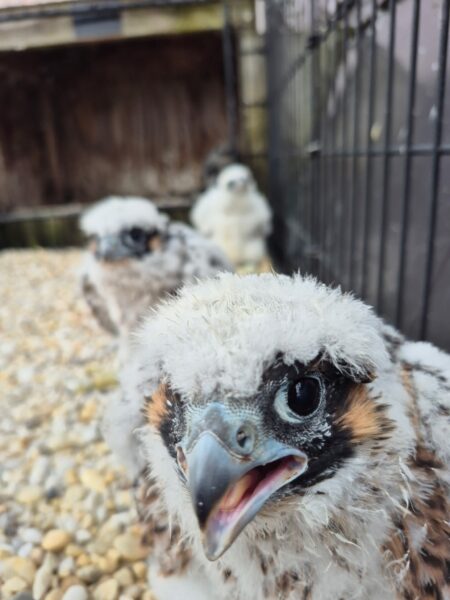
ጫጩቶቹ ባንዶቻቸውን እንደተቀበሉ ወደ ወንበሩ ተመልሰዋል ።
እነዚህ የማሰሪያ እና የክትትል ጥረቶች እጅግ በጣም አስፈላጊ ናቸው ምክንያቱም ባዮሎጂስቶች የእያንዳንዱን ወፎች እንቅስቃሴ፣ የዘር ሐረግ፣ የመራቢያ ታሪክ እና ረጅም ዕድሜ እንዲከታተሉ ያስችላቸዋል። ይህ በተለይ በቨርጂኒያ እንደሚታየው አሁንም እያገገሙ ባሉ ትናንሽ የጭልፊት ዝርያዎች ላይ በጣም አስፈላጊ ነው። በመጨረሻም፣ ዛሬ ከእኛ ጋር ለተቀላቀሉን የቪአይፒ እንግዶች ልዩ ምስጋናችንን እናቀርባለን፤ ከእነዚህም መካከል የተፈጥሮ እና የታሪካዊ ሀብት ጸሐፊ ጽሕፈት ቤት ሠራተኞች፣ የሕዝብ አካውንቶች ኦዲተር ሠራተኞች እና እድለኞቹ የ 2026 ዕጣ ፈንታ አሸናፊዎቻችን ይገኙበታል።