

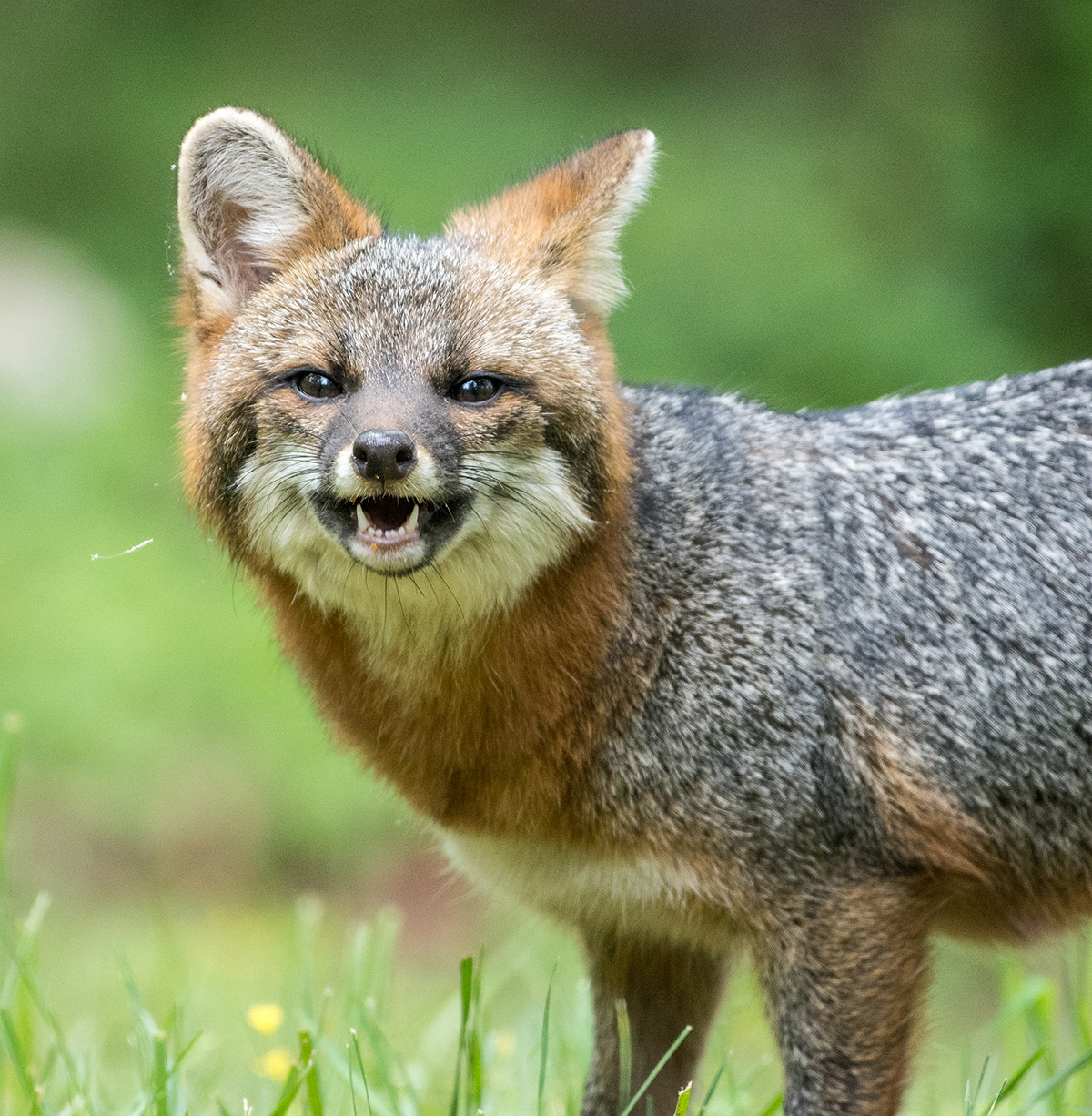
An eastern gray fox displays its reddish-orange fur, grizzled gray coat, and distinctive facial markings. Photo by Bill Tucker
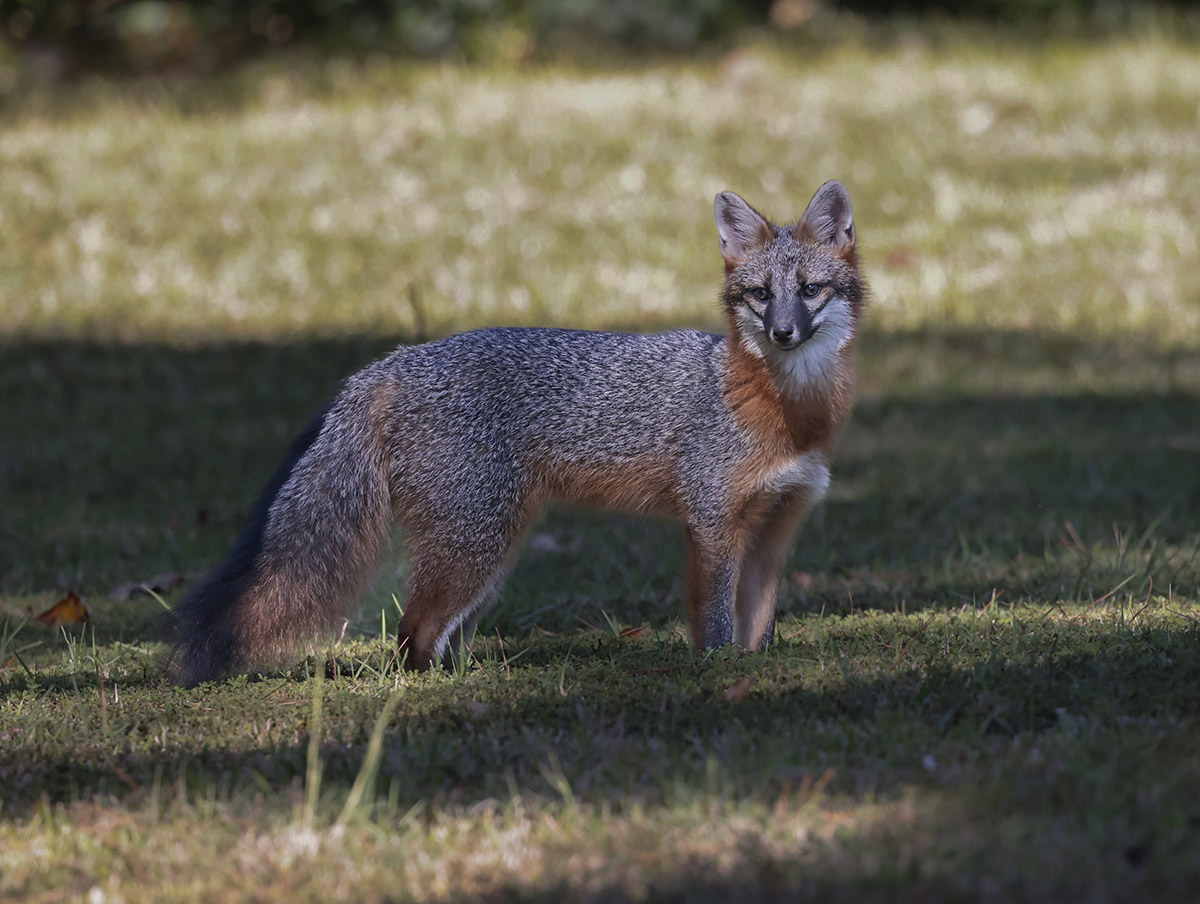
An eastern gray fox stands in a grassy clearing, displaying its bushy, black-tipped tail. Photo by Susan O’Connell.
እውነታ ፋይል
ሳይንሳዊ ስም፡- Urocyon cinereoargenteus
ምደባ: አጥቢ እንስሳት, ትዕዛዝ ካርኒቮራ, ቤተሰብ Canidae
Size: Adult gray foxes can attain lengths of 32 to 45 inches long, including the tail; weigh between 6 and 11 pounds; and stand about 15 inches at the shoulder.
Life Span: Average life span of 6-8 years in the wild.
ስርጭት
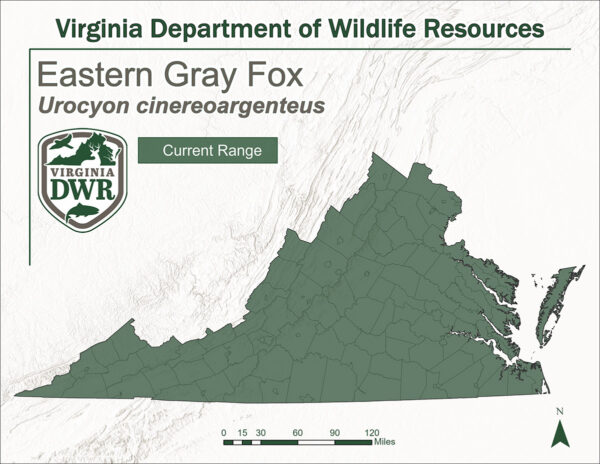
The Eastern Gray Fox is native to north and central America. It has historically been found across much of Virginia. In recent decades, anecdotal evidence has suggested a decline in the gray fox population and range in Virginia and surrounding states. The Virginia Gray Fox Project aims to ascertain the current status of the gray fox population across the state.
ባህሪያትን መለየት

An eastern gray fox on the forest edge. Photo by David Malmquist.
- Smaller than a red fox, the other fox species in Virginia
- Fur is grizzled gray above, white to ashy below, and lighter gray to reddish on the neck and sides.
- Long bushy tail with a median black stripe, and a black tip.
- Primarily nocturnal animals and are most active at dawn and dusk.
- Adept climbers, and use trees to escape enemies and access food.
- Barks, yaps and yips are the frequent vocalizations.
መኖሪያ ቤት እና ባህሪ
Gray foxes can be found in diverse habitats, but prefer brushy and deciduous forest areas, including woodland/farmland edges and hilly terrain near water sources such as streams or lakes. They can also be found in heavily wooded swamps. Gray foxes breed from February through April and are seasonally monogamous. A litter of two to seven pups are born from March to May in a whelping den, which may have grass, leaves, or bark as nesting material.

An eastern gray fox stands at the edge of a grassy area, showing its reddish legs and black-tipped tail. Photo by the U.S. Fish and Wildlife Service.
Both parents care for the pups, which are weaned around 9 weeks of age. The pups will remain with the mother until fall, when they typically disperse to find new territories. Gray foxes use dens for raising young and for warmth during the winter months. Dens can be found in scrap piles, hollow logs, under rocks, in ground burrows, under buildings, and even up in trees.
Diet
This is an opportunistic consumer. Gray foxes will feed primarily on small mammals, but will also consume insects, birds, fruits, and nuts. The diet varies with the season, and relative abundance of foods. Animal matter is most important in the winter and spring. Insects and fruit are important in the summer and fall. Cottontails are an important food, and gray foxes eat more birds than the red fox. While gray foxes will typically feed on natural foods, they can be attracted to human-related food if accessible, which is why it is important to remove available food and secure domestic poultry and rabbits. Due to its woodland preference, the gray fox tends to have less interactions with people and domestic animals than the red fox.
ማስፈራሪያዎች
The main threats for gray fox include predation by coyotes, bobcats, owls, and other raptors, especially when young, and interactions with people and dogs. Mortality from roadways and vehicles also occurs. Gray foxes are also subject to several diseases, including rabies, and are especially susceptible to canine distemper virus. Gray foxes, along with other predators and scavengers, are also impacted by secondary rodenticide exposure.
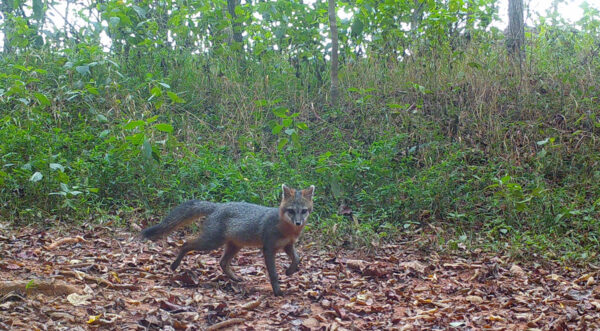
An eastern gray fox moves across a leaf-covered forest floor. Photo courtesy of the Virginia Gray Fox Project – Facebook Group.
እንዴት መርዳት ትችላላችሁ
The Virginia Gray Fox Project has finished with data collection and is no longer seeking landowner participation. However, there are several things you can do to help the gray fox and other wildlife species in Virginia:
- If you are feeding wildlife, stop. This will cause them to lose their fear of humans.
- Keep trash and food secure so that wildlife are unable to access them.
- Protect fowl and domestic rabbits in well-secured coops, especially overnight when predators are most active. This includes fencing around the entire coop and buried at least 1 foot into the ground.
- Close up openings under and into your buildings to prevent wildlife from denning there. It is best to do this in the fall-winter months before the breeding season begins in February.
- If a fox or other wildlife species is coming too close or searching for food in your yard, you can scare it off with hazing (being loud, spraying water from a hose) to teach it that it is not welcome.
- Follow the speed limit on roads and watch out for animals crossing, especially at night.
- በቨርጂኒያ ግዛት እንስሳን ወደ ሌላ አካባቢ ማጥመድ እና ማዛወር ህገወጥ ነው።
- ቀበሮ እንደ መሰናከል፣ በአፍ ላይ አረፋ ወይም ጥቃትን የመሳሰሉ የእብድ እብድ ምልክቶችን ካሳየ የአካባቢዎን የጤና ክፍል ያነጋግሩ።
- Pass along this information to your neighbors!

An eastern gray fox stands alert in a grassy clearing bordered by woodland vegetation. Photo courtesy of the Virginia Gray Fox Project – Facebook
የተሻሻለበት የቅርብ ቀን፦ ኖቬምበር 17 ቀን 2026
የVirginia የዱር አራዊት ሀብት ዝርያዎች መምሪያ የመገለጫ ዳታቤዝ ለVirginia አሳ እና የዱር አራዊት ዝርያዎች የመረጃ ማከማቻ ሆኖ ያገለግላል። የመረጃ ቋቱ የሚተዳደረው እና የሚዘጋጀው በዱር እንስሳት መረጃ እና የአካባቢ አገልግሎቶች (WIES) ፕሮግራም ነው። የዝርያዎች መገለጫ መረጃ፣ የስርጭት መረጃ እና ፎቶግራፍ የሚመነጨው በVirginia የዱር አራዊት ሀብት መምሪያ፣ የግዛት እና የፌዴራል ኤጀንሲዎች፣ የስብስብ ፈቃዶች እና ሌሎች ታማኝ አጋሮች ነው። ይህ ምርት ለህጋዊ፣ ምህንድስና ወይም የዳሰሳ ጥናት አገልግሎት ተስማሚ አይደለም። የVirginia የዱር አራዊት ሃብቶች ዲፓርትመንት ለሚጎድሉ መረጃዎች፣ ስህተቶች፣ ወይም ሊኖሩ ለሚችሉ ሌሎች ስህተቶች ኃላፊነቱን አይቀበልም። በዚህ ምርት የአገልግሎት ውል መሰረት፣ በዚህ የኃላፊነት ማስተማመኛ ተስማምተሃል።